
The Hidden Dangers of Summer Menus: Why Hot Dogs and Hard Candy are High Risk
Hot dogs on the grill, fresh fruit, a bowl of candy — they feel like summer. But for older adults with chewing or swallowing difficulties, a few familiar favorites can carry hidden choking risks. Learn why cut and texture matter, the warning signs to watch for during meals, and simple ways to keep summer favorites on the menu safely.
Hot dogs on the grill, fresh fruit, a bowl of candy, foods that just feel like summer. But for older adults, a few of these familiar favorites can come with a hidden risk: choking.
Seniors may have more difficulty chewing or swallowing due to missing teeth, dentures, medications, cognitive changes, or conditions such as dementia, Parkinson’s disease, and stroke. That does not mean summer favorites have to disappear from the menu. In many cases, it comes down to knowing which foods need extra attention and making a few simple changes before serving them.
Let’s Be Frank About Hot Dogs
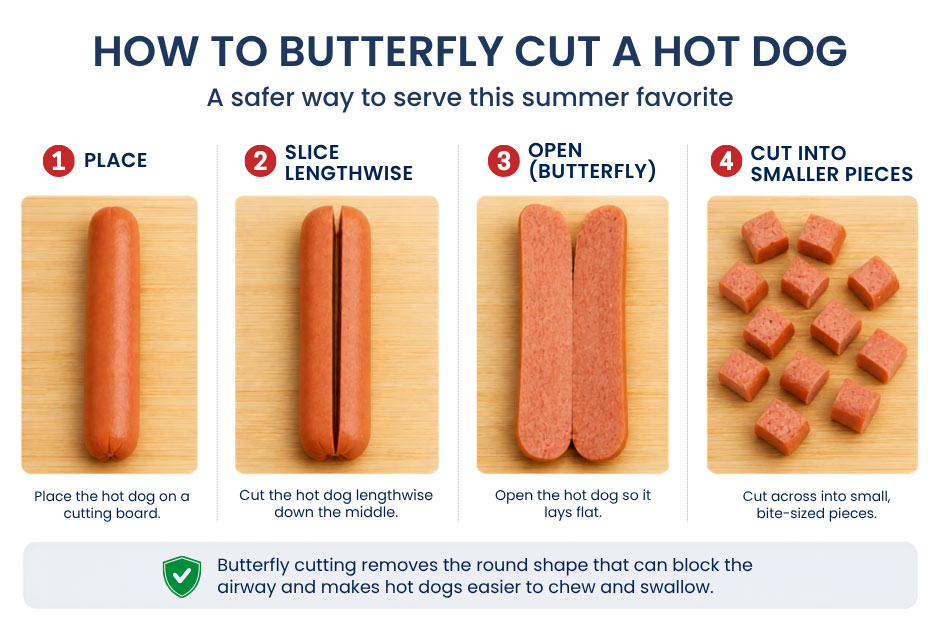
A hot dog may seem soft and easy to eat, but its shape is part of what makes it dangerous. When cut into round slices, a piece can be just the right size and shape to block the airway.
So, skip the coin shaped slices.
Instead, try butterfly cutting. Slice the hot dog lengthwise first, then cut it into smaller pieces. By breaking up that round shape, you can reduce the risk of a piece creating a complete blockage. Before putting hot dogs on the menu, ask a few questions. Does the resident have trouble chewing? Are they on a modified texture diet? Do they tend to take large bites or eat quickly? Have they shown any recent changes in their ability to swallow?
For some residents, changing the cut may be enough. For others, the safest choice may be a different food altogether. Always follow the residents' care plan and dietary restrictions. If a texture or menu change is needed, that decision belongs to the resident’s physician, dietitian, or speech-language pathologist as part of the care plan which should be updated in writing to reflect the change — not a judgment call made in the kitchen.
A Hard Candy to Swallow
A bowl of hard candy may seem like an easy treat to leave out for residents, especially during activities or social events. But hard candy can easily slip toward the back of the throat before someone is ready to swallow.
This is especially concerning for residents with swallowing difficulties, dry mouth, cognitive impairment, or reduced control of the muscles used for eating. A simple solution? Swap the hard candy for something softer.
Choose treats that are easier to chew and swallow and appropriate for the residents diet. And remember “soft” does not automatically mean “safe”. Sticky or chewy candies can create their own problems, so individual dietary needs should always guide the choice.
Take a Second Look at the Rest of the Plate
Hot dogs and hard candy are not the only foods worth watching. Whole grapes, raw vegetables, nuts, popcorn, large pieces of meat or cheese, and other hard, round, or difficult to chew foods can also become choking hazards. When preparing a meal, take a second look before the plate leaves the kitchen. Could this be cut smaller? Does the shape create a risk? Is the texture appropriate for this resident? For more guidance on how to answer these questions, check out our recent Youtube video: Who Gets a Hotdog? Choking Prevention for Care Facilities. PCH Mutual also provides mechanical soft diet printables in our resource library on CareChron.
Those few seconds can make a difference.
It is also important to pay attention while residents are eating. Coughing during meals, difficulty chewing, food remaining in the mouth, a wet or gurgly voice after swallowing, or repeated trouble with certain foods may be signs that something has changed. These concerns should be documented and reported according to facility procedures or applicable regulations.
Keep the Tradition, Lower the Risk
Choking prevention does not have to mean taking the fun out of summer meals. The goal is not to remove every favorite food. It is to serve food in a way that is appropriate for the person eating it. Know each resident's dietary needs. Modify foods when needed. Look at shape, size, and texture before serving. Pay attention during meals. And make sure every staff member is trained and confident in choking response, including abdominal thrusts. First aid/CPR certification requirements vary by state. Check your state's compliance resources for what's required where you operate. The American Red Cross and American Heart Association both offer certified courses that cover choking response. And make sure staff know what to do if a choking emergency occurs.
A barbeque can still be a barbeque. Sometimes, making it safer is as simple as changing the way you cut the hot dog.